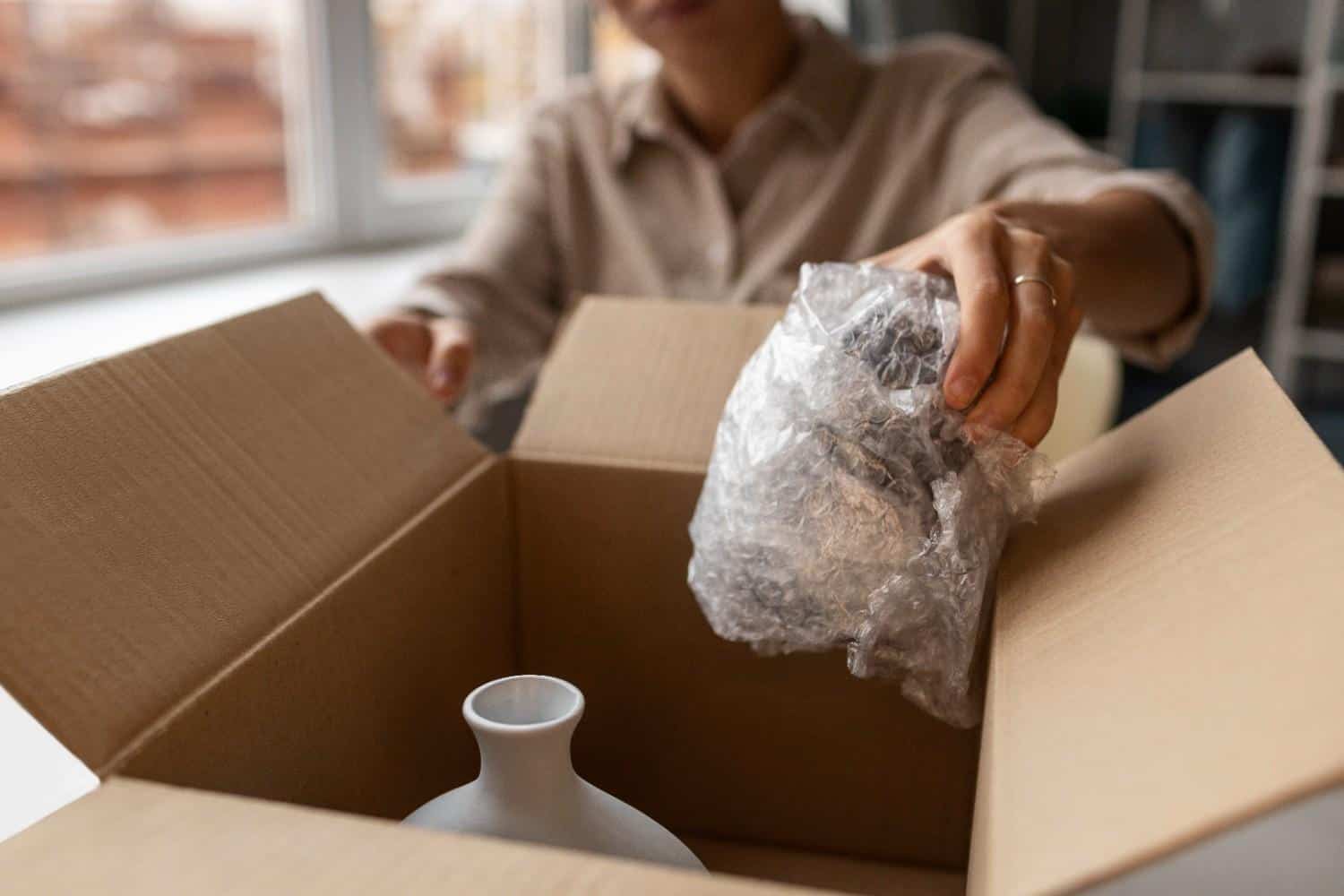








Broken glass, cracked frames, shattered ceramics – fragile item damage is one of the most common and most avoidable problems in any move. The difference between items arriving intact and items arriving in pieces almost always comes down to how they were packed before the truck ever left the driveway. Whether you are packing yourself or working alongside a moving company, understanding the right techniques gives your most delicate belongings the best possible chance of making it to your new home in one piece.
Why Proper Packing Matters More Than You Think
A moving truck is not a still environment. It accelerates, brakes, turns, and travels over uneven roads. Items shift inside boxes, boxes shift inside the truck, and anything that is not properly cushioned or secured absorbs the impact of every one of those movements. Professional movers pack fragile items with this reality in mind – every layer of protection they add is designed to absorb and distribute force rather than let it reach the item itself.
The goal of packing fragile items is not just to fill a box. It is to create an independent protective environment around each item so that even if the box is jostled, the contents remain completely isolated from that movement. According to Moving.com’s expert packing guidance, improper cushioning and void space inside boxes are the two leading causes of fragile item damage during a move – both of which are fully preventable with the right approach.
The Materials You Need Before You Start
Using the right materials is not optional – it is foundational. Improvised packing with inadequate materials is one of the leading causes of damage during a move. Before you pack a single fragile item, make sure you have the following on hand:
- Packing paper – unprinted newsprint or plain white packing paper. Avoid printed newspaper as the ink transfers and can stain.
- Bubble wrap – essential for glass, ceramics, and anything with protruding parts.
- Sturdy double-walled boxes – single-walled boxes compress under weight and fail under pressure. Use double-walled for anything fragile.
- Packing tape – reinforce every seam and the bottom of every box before loading anything inside.
- Foam peanuts or packing foam sheets – for filling void space and creating a buffer between items.
- Markers – to clearly label every fragile box on the top and all four sides.
Do not substitute towels, clothing, or soft furnishings as your primary packing material for genuinely fragile items. They can supplement padding but they do not provide the consistent, reliable cushioning that proper packing materials offer.
How to Pack Glassware and Stemware
Glasses and stemware are among the most commonly damaged items in any move. Their stems and rims are highly vulnerable, and they cannot be stacked without proper separation. Follow this process for each piece:
- Place a sheet of packing paper on a flat surface and position the glass at one corner at a slight angle.
- Roll the glass across the paper, tucking the ends inside as you go, until the entire piece is wrapped in two to three layers.
- For stemware, wrap the stem separately first with a small piece of bubble wrap before completing the full paper wrap.
- Place glasses upright in the box – never on their sides. Glasses are structurally stronger standing upright.
- Line the bottom of the box with at least three inches of crumpled packing paper or foam before placing any glasses inside.
- Never stack glasses directly on top of each other. Use a divider insert or a layer of crumpled paper between every row.
How to Pack Plates and Bowls
Most people stack plates flat inside a box. This is the wrong approach. Plates packed flat bear the full weight of everything above them and are far more likely to crack. The correct method is to pack plates vertically, on their edges, like records in a crate. In this orientation they are significantly stronger and distribute pressure evenly across the rim rather than the face.
- Wrap each plate individually in two to three sheets of packing paper.
- Add a sheet of bubble wrap around particularly valuable or thin pieces.
- Stand plates vertically in the box, side by side, with crumpled paper filling any gaps between them.
- Never leave empty space in the box – void space allows movement, and movement causes breakage.
- Bowls can nest together if each one is individually wrapped first. Pack them vertically where possible, or in tight clusters with full cushioning between each piece.
How to Pack Artwork and Framed Items
Framed artwork and mirrors require a different approach entirely. The glass face is the most vulnerable point, and it needs to be protected before anything else is done. Trusted movers typically use corner protectors and mirror boxes – purpose-built boxes sized specifically for framed items – and you should do the same.
- Place foam or cardboard corner protectors on all four corners of the frame.
- Apply a large X of packing tape directly across the glass face. This does not prevent the glass from breaking but it holds the shards in place if it does, protecting the artwork underneath.
- Wrap the entire piece in two layers of bubble wrap and secure with tape.
- Slide the piece into a mirror box or a purpose-cut cardboard sleeve.
- Store framed pieces vertically inside the truck – never flat, and never with heavy items placed on top of them.
How to Pack Lamps and Light Fixtures
Lamps present a unique challenge because their components – base, shade, and bulb – each require separate packing treatment. Attempting to pack a lamp as a single unit almost always results in damage to at least one part.
- Remove the bulb and wrap it separately in bubble wrap. Bulbs do not survive transit unpacked.
- Remove the shade and pack it in its own box with crumpled paper cushioning inside and around it. Never place anything inside the shade during transport.
- Wrap the lamp base in bubble wrap from the bottom up, paying special attention to any narrow sections.
- Pack the base upright in a box with foam or crumpled paper filling all void space.
How to Pack Books and Electronics
Books are heavier than most people expect once boxed, and that weight creates real risk for fragile items packed nearby. Always pack books in small boxes and never mix them with delicate items. If you are moving a significant collection, our full guide on packing books safely and efficiently covers everything from box selection to transport sequencing.
Electronics and small appliances are fragile in a different way – their internal components are sensitive to impact and vibration even when the exterior appears undamaged. Whenever possible, use the original manufacturer’s packaging. It is specifically designed for that item and provides better protection than any generic box.
- Remove batteries from any device before packing – batteries can leak and corrode internal components during a move.
- Coil cables neatly and secure them with a twist tie or rubber band before placing them in the box.
- Wrap screens with anti-static bubble wrap rather than standard bubble wrap to prevent static damage.
- Fill all void space in the box with foam peanuts or crumpled paper – electronics should not shift inside their packaging at all.
- Label boxes containing screens as fragile and indicate which side is up. Your moving company needs to know immediately how to handle and orient these boxes.
Box Preparation and Labeling
The best packing job in the world is undermined by a weak box or poor labeling. Every box containing fragile items needs to be prepared and marked correctly before anything is placed inside it.
- Reinforce the bottom seam of every box with two strips of packing tape running in opposite directions.
- Add a layer of crumpled packing paper or foam at the base of every box as a foundational cushion – at least two to three inches deep.
- Once packed, press gently on the top of the box. If you feel movement inside, the box needs more fill material.
- Write FRAGILE clearly on the top and all four sides of the box in large letters.
- Add THIS SIDE UP with an arrow on at least two sides.
- Note the contents and destination room on the box so movers can handle and place it correctly without needing to ask.
What Not to Do When Packing Fragile Items
Knowing what to avoid is just as important as knowing the right technique. Avoiding common moving mistakes like these can be the difference between a damage-free move and a costly one:
- Overpacking boxes – a box that is too heavy is more likely to be dropped and more likely to fail at the seams.
- Underpacking boxes – empty space allows items to shift and collide during transit.
- Mixing fragile and heavy items in the same box.
- Using worn or previously damaged boxes that have lost their structural integrity.
- Skipping individual wrapping and relying on proximity alone to protect items.
- Placing fragile boxes at the bottom of a stack in the truck.
Conclusion
Packing fragile items properly takes time, the right materials, and a methodical approach – but the effort is always worth it. Every item that arrives intact at your new home is the result of a deliberate decision made during packing. Once your boxes are ready, make sure you also know what to expect on moving day so the entire process runs without interruption from start to finish.
If you are preparing for an upcoming move and want the confidence of knowing your most valuable and delicate belongings are in expert hands, work with trusted movers who treat your possessions with the same care you do. Our experienced Virginia Beach movers bring that standard to every job – from the first box loaded to the last item placed.